Cannabis Social Media Marketing
Meta lets dispensaries post business content, shown to adults only, as long as nothing is offered for sale. What Meta, TikTok and X allow in 2026, 15 post ideas that stay within the rules, and how to run it week by week.

Key takeaways
- Meta allows business content from dispensaries, shown to adults only, but no post can try to buy, sell, trade or gift cannabis.
- Meta doesn't accept THC ads, and X accepts some cannabis ads only from licensed, pre-approved advertisers targeting adults 21 and older.
- State rules apply to social posts too: California requires at least 71.6% of a digital audience to be 21 or older, and age affirmation before one-to-one conversations.
- Post the people, the store, the neighborhood and education. Leave out prices, cannabis giveaways, health claims, people using cannabis and anything that could appeal to kids.
- Run it as a weekly routine with a compliance review, keep the accounts in your name and point every post back to your website and newsletter.
Cannabis social media marketing is how a dispensary or a cannabis brand stays in front of the adults who follow it: the store, the staff, events, education and news, posted on the apps people open every day. It runs on rules that differ by platform and change often, and a post that offers cannabis for sale can put the whole account at risk.
The rules are written down, and they leave more room than it might seem. Meta’s Community Standards allow business content from marijuana dispensaries, shown only to adults, as long as it doesn’t try to buy, sell or trade cannabis. X accepts some cannabis ads from licensed, pre-approved advertisers. Here is what each platform allows in 2026, 15 cannabis social media ideas that stay within the rules, and how to run dispensary social media week by week.
What cannabis social media marketing can and can’t do
None of the big platforms covered here lets a dispensary sell THC products in a post or an ad. What social media does well is build familiarity, so that people choose your store when they are ready to buy. Good cannabis social media marketing does four jobs:
- It shows the store and the people, so a first visit feels familiar.
- It keeps regulars informed about hours, events and news.
- It teaches, answering the questions your budtenders hear every day.
- It sends people to the channels you own: your website, your menu and your newsletter.
That last job matters most. A platform can change its rules or restrict an account overnight, while your website and email list stay yours. Our guide to cannabis content marketing explains how social posts fit with the articles and emails that feed them.
Cannabis social media rules, platform by platform
Each platform publishes its own rules, and your state’s advertising rules apply on top of them. This is what the official policies say in 2026.
Facebook and Instagram
Meta’s Community Standards don’t allow content that attempts to buy, sell, trade, donate or gift marijuana and products containing THC. They do allow business content posted by marijuana dispensaries when there is no attempt to sell, and Meta shows that content only to people 18 and older. Posts that speak positively about cannabis or show marijuana paraphernalia are also limited to adults.
Meta’s ad standards are stricter. Ads can’t promote or offer THC products, and they can’t promote the sale of paraphernalia such as bongs, rolling papers and vaporizers. CBD products with no more than 0.3% THC can be advertised only by advertisers certified by LegitScript with Meta’s written authorization, only in the United States, only to people 18 or older and with no health claims.
Both apps let you narrow who sees your account. A professional Instagram account can set a minimum age, for every country or country by country, and a Facebook Page can add age restrictions. Facebook warns that a restricted Page can’t be seen by people who are logged out and that you may not be able to share its posts on other sites, so weigh those trade-offs before you switch it on.
TikTok
TikTok’s Community Guidelines, in effect since September 24, 2026, don’t allow trading, marketing or providing access to regulated, prohibited or high-risk goods and services, with limited exceptions for verified business accounts and verified TikTok Shop sellers that meet its standards. TikTok also requires its content disclosure setting whenever you promote your own business, product or service. For a dispensary, that leaves the people, the neighborhood and education.
X
X accepts some cannabis ads in the United States, under strict conditions. Under its drugs and drug paraphernalia policy, advertisers must be licensed and pre-approved by X, can only target places where they are licensed to promote online and can’t target anyone under 21. Even then, ads can’t promote or offer cannabis for sale, except topical hemp-derived CBD at or below the 0.3% THC threshold. Landing pages must be age-gated, and ads can’t show people using cannabis, make health claims or appeal to minors.
Your state’s rules still apply
State rules can cover social posts too. In California, Business and Professions Code 26151 says marketing in digital communications can only be displayed where at least 71.6% of the audience is reasonably expected to be 21 or older. Any direct, individualized communication or dialogue controlled by the licensee needs a method of age affirmation first, so treat direct messages with care. Our guide to cannabis advertising laws by state covers the audience rules in other large markets.
Here is the short version of the platform rules:
| Platform | What the rules allow in 2026 |
|---|---|
| Facebook and Instagram posts | Business content from dispensaries, shown to adults only. No offers to buy, sell, trade or gift cannabis. |
| Facebook and Instagram ads | No THC products or paraphernalia. CBD only with LegitScript certification, Meta’s written authorization and an audience 18 or older in the U.S. |
| TikTok | No trading, marketing or providing access to regulated goods, with limited exceptions for verified business accounts. Business posts need the disclosure setting. |
| X ads | Licensed, pre-approved advertisers only, targeting adults 21 and older where they are licensed. No offers to sell cannabis, except topical hemp CBD. |
Which platforms fit dispensary social media
You don’t need to be everywhere. Pick the platforms where your adult customers already spend time and where the rules let you show the store, then do those well.
- Instagram and Facebook: the natural base for dispensary social media, because Meta’s rules allow business content from dispensaries, shown to adults.
- X: worth a look for licensed advertisers who want paid reach to adults 21 and older, within X’s limits.
- TikTok: for the people and education, if your team enjoys short video, keeping in mind that it doesn’t allow marketing regulated goods.
- LinkedIn: useful for cannabis brands that sell to stores, hire or raise money, more than for reaching shoppers.
Whatever you choose, give your Google Business Profile the same care as any social account. Shoppers see it in Google Search and Maps when they look for a store nearby, and its photos, posts and hours should match your social profiles.

15 cannabis social media ideas that stay within the rules
These cannabis social media ideas work on any platform that allows dispensary business content. None of them needs a price, a discount or a call to buy. Rotate between the three groups so your dispensary social media never reads like a string of announcements.
The people
- Meet the team: one budtender a month, with what they love about the job.
- Ask the budtender: a short video that answers one question customers ask often.
- The owner’s story: why the store exists and what it stands for.
- Behind the counter: how the store gets ready before opening.
- Milestones: work anniversaries, new hires and the store’s birthday.
The store and the neighborhood
- A first-visit guide: parking, ID, check-in and what to expect inside.
- Hours that change: holidays, weather closures and longer weekend hours.
- Events: classes, vendor days and community events your state allows.
- Local partners: artists, food trucks, cleanups and causes you support.
- Design details: the mural, the playlist, the art on the walls.
Education and news
- How to read a label or a certificate of analysis, step by step.
- Law updates in your state, linked to the official source.
- Safe storage at home, locked and away from children and pets.
- A glossary series on terpenes, cannabinoids and product types, with no health claims.
- Your best articles and newsletter, with a link to sign up.
For more ways to put these ideas to work across email, search and the store, see our dispensary marketing ideas.
What to leave out of dispensary social media
These are the posts that put dispensary social media accounts at risk. Leave them out:
- Anything that sells: prices, discounts, “buy now,” “DM to order” and delivery offers.
- Giveaways of cannabis: Meta doesn’t allow content that offers to gift or donate THC products.
- Anything that could appeal to kids: cartoons, candy imagery and young-looking models. California, for one, bans cartoons in cannabis marketing.
- Health claims: never say a product treats, cures or prevents anything.
- People using cannabis in photos or video.
- Paid posts without a disclosure, from you or from anyone you pay.
A simple test before you publish: if a post only makes sense with a price, a product link or an offer, it belongs on your website, where the menu lives.
Cannabis social media marketing for brands
Growers, processors and product brands follow the same platform rules as stores. Their job on social media is to make the brand known and send people to the licensed stores that carry it, so cannabis social media marketing for a brand leans on the story behind the product: the farm, the people and how it is made and tested.
- Show the process: cultivation, testing and packaging, with no health claims.
- Support your retailers: share photos and approved captions that stores can post on their own accounts.
- Keep a store list on your website: a page with the licensed stores that carry you, so posts can point there.
- CBD brands: Meta shows posts that sell CBD to adults only, and CBD ads need LegitScript certification and Meta’s written authorization.
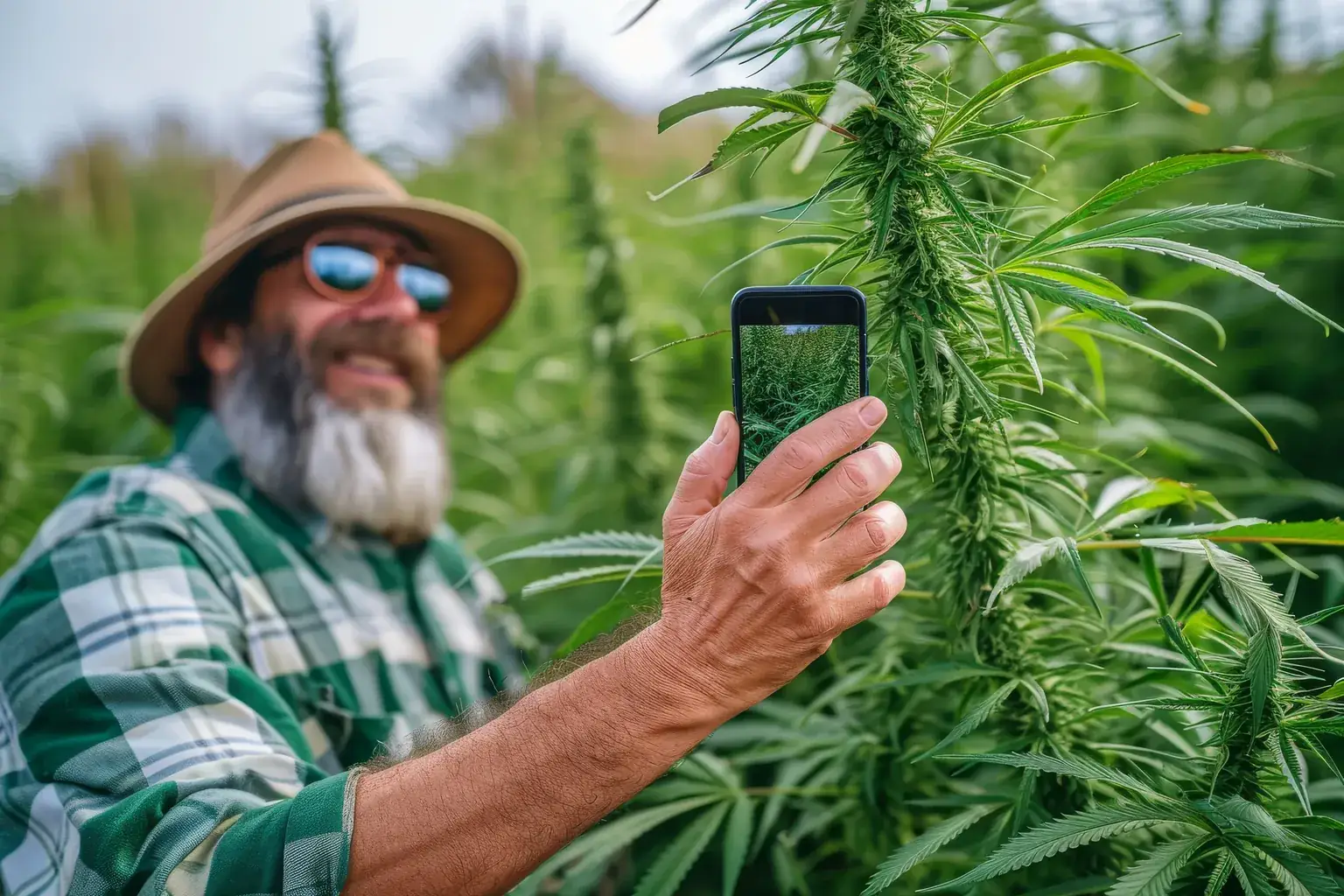
Cannabis social media management, week by week
Cannabis social media management is a routine more than a burst of creativity. Most of the work happens before a post goes out:
- Plan: pick the week’s posts from a monthly calendar built around your sales dates and events.
- Create: shoot photos and short videos in the store in one batch, with permission from everyone on camera.
- Review: one person checks every post against the platform rules and your state’s rules before it goes out.
The rest happens once it is live:
- Publish: post when your followers are most active, which the app’s insights will show you.
- Respond: answer comments and messages within a day, and move ordering questions to your website or phone.
- Report: once a month, look at what worked and plan the next month.
There is no official number of posts for cannabis social media marketing. Post as often as you can keep the quality and the compliance review steady, on a rhythm your followers can count on.
Comments and direct messages
Comments and messages are where dispensary social media turns into conversations. Answer questions about hours, events and parking in public, and take anything about products, prices or orders to your website or phone. In California, remember that a direct, individualized conversation the licensee controls needs age affirmation first. Remove comments from others that offer to sell or trade cannabis.
A calendar keeps the routine on track. Our 2027 cannabis marketing calendar lists the dates that sell, from 4/20 to the holidays, each with a campaign idea, an email subject line and an Instagram caption.
How to measure cannabis social media marketing
Likes are the weakest signal you have. To see whether cannabis social media marketing is helping the store, track these every month:
- Profile visits and website clicks: people moving from the post toward your menu.
- Saves and shares: content people want to keep or pass on.
- Messages and questions: conversations that start with a post.
- Newsletter sign-ups from social: followers who move to a channel you own.
- “I saw you on Instagram”: ask new customers at the counter how they found you.
Compare each month with the one before, and with the same month last year once you have it. If profile visits and website clicks grow while store sales hold or rise, your cannabis social media marketing is doing its job. If only the follower count grows, look again at what you post.
Influencers and creators: disclose every deal
Creators can reach adults you can’t reach with ads, and the rules for them are clear. The FTC’s Disclosures 101 for Social Media Influencers says creators must disclose any financial, employment, personal or family relationship with a brand, including free or discounted products. The disclosure has to be hard to miss and placed with the endorsement itself, and in a video it belongs in the video, not only in the description.
The FTC also warns not to assume a platform’s disclosure tool is enough on its own, while TikTok requires its setting for branded content. Use both. Put the disclosure rules in writing for every creator you work with, and check their posts against your state’s rules as you would your own.
What a cannabis social media agency does
A cannabis social media agency plans, creates and runs your accounts within the rules, so your team can focus on the store. The work usually covers strategy, a monthly calendar, photo and video in the store, captions, a compliance review of every post, replies to comments and messages, and a monthly report.
When you compare one cannabis social media agency with another, ask:
- Which states and platforms have you worked with, and can we see accounts you manage?
- Who reviews each post for compliance, and against which rules?
- Will the accounts stay in our name, with you added as a manager?
- What do you report each month, and how does it connect to visits and sales?
- What happens if a post is removed or the account is restricted?
- Can you also run our newsletter and website, the channels we own?
In-house or with a cannabis social media agency
Cannabis social media management can live in the store when someone on the team has the time, an eye for photos and a clear list of what can’t be posted. An agency makes sense when nobody does, when you run several locations or brands, or when you want social media, email and your website planned together. Either way, the accounts and the photos should stay in your name.
Good cannabis social media management keeps all of it in one plan, so a post, an email and a page on your website tell the same story.
Protect the account before you need to
Treat your accounts like the store keys. Turn on two-factor authentication, give admin access to at least two people you trust, and remove anyone who leaves. Keep a list of every account, its login email and who owns it. Save the original photos, videos and captions in a shared folder the store owns, so the content outlives any single app or agency.
If a post is removed or the account is restricted, read the notice, fix what it points to and appeal through the app. Meanwhile, your website and newsletter keep working, which is why cannabis social media marketing should always point back to them.
Where to start with cannabis social media marketing
Start with an audit of your dispensary social media. Check that every account uses the same name, photo, bio and link to your website, decide whether to turn on the age settings, and write down the platform and state rules your team has to follow. Then plan four weeks of posts from the ideas above, with a compliance review before anything goes out.
If you want a partner for it, our cannabis digital marketing team plans and manages social media, newsletters and email marketing for dispensaries and cannabis brands, within your state’s rules, and connects every post to the pages that sell.
Frequently asked questions
-
Cannabis social media marketing is the use of social platforms by dispensaries and cannabis brands to show the store, the people, events and education to adults, within each platform's rules and state advertising law. It builds familiarity and sends people to the website and newsletter, where the menu and the sale live.
-
Yes. Meta's Community Standards allow business content posted by marijuana dispensaries as long as it doesn't attempt to buy, sell or trade cannabis or THC products, and Meta shows that content only to adults 18 and older.
-
Not for THC products. Meta's ad standards don't allow ads that promote or offer THC products, or paraphernalia such as bongs, rolling papers and vaporizers. CBD products with no more than 0.3% THC can be advertised in the U.S. by advertisers certified by LegitScript with Meta's written authorization, to people 18 or older and with no health claims.
-
Carefully. TikTok's Community Guidelines don't allow trading, marketing or providing access to regulated, prohibited or high-risk goods and services, with limited exceptions for verified business accounts. A dispensary on TikTok should focus on the people, the neighborhood and education, and turn on the content disclosure setting for business posts.
-
Yes, in the United States, under strict conditions. Advertisers must be licensed and pre-approved by X, can only target places where they are licensed to promote online and can't target anyone under 21. Ads can't offer cannabis for sale, except topical hemp-derived CBD at or below the 0.3% THC threshold, and landing pages must be age-gated.
-
It's risky. Meta doesn't allow content that attempts to buy, sell or trade cannabis, and prices, discounts, 'DM to order' and delivery offers read as selling. Keep prices on your website menu and use social media to send people there.
-
Meta allows posts that sell CBD, but it shows them only to adults 18 and older. CBD ads are a separate matter: they need LegitScript certification and Meta's written authorization, and they can only run in the U.S. Avoid health claims in both, because the FDA has challenged them in warning letters to CBD companies.
-
It's worth considering. A professional Instagram account can set a minimum age for every country or country by country, which helps keep your audience adult. A Facebook Page can add age restrictions too, though a restricted Page can't be seen by people who are logged out.
-
The people, the store, the neighborhood and education: team introductions, short answers to common questions, first-visit guides, hours and events, local partners, label and lab-result explainers, law updates, safe storage and links to your articles and newsletter.
-
Prices or buy-now offers, giveaways of cannabis, health claims, people using cannabis, anything that could appeal to kids such as cartoons or candy imagery, and paid posts without a disclosure.
-
There is no official number. Post as often as you can keep the quality and the compliance review steady, on a rhythm your followers can count on, and plan it in a monthly calendar.
-
It plans the strategy and the monthly calendar, produces photos and videos, writes captions, reviews every post against platform and state rules, answers comments and messages, and reports results each month, with the accounts kept in your name.
-
Ask which states and platforms it has worked with, who reviews each post for compliance, whether the accounts stay in your name, what it reports each month, what happens if an account is restricted, and whether it can also run your newsletter and website.
-
It is the weekly work of running the accounts: planning posts from a calendar, creating photos and videos, reviewing each post for compliance, publishing, answering comments and messages, and reporting what worked.
-
It depends on how many platforms and posts you need, who produces the photos and video, how much community management is involved and whether email and the website are part of the plan. We send a written proposal after a first call.
-
Yes. The FTC says creators must disclose any financial, employment, personal or family relationship with a brand, including free or discounted products, in a way that is hard to miss and placed with the endorsement. In a video, the disclosure belongs in the video itself. TikTok also requires its content disclosure setting for branded content.
-
In California, yes for conversations you control. The law requires a method of age affirmation, such as user confirmation or a birth date, before any direct, individualized communication or dialogue controlled by the licensee. Check your own state's rules.
-
Read the notice first, because it names the rule that was applied. For dispensaries, the rule that matters most bans content that attempts to buy, sell or trade cannabis, so check recent posts and comments for prices, ordering or delivery language, fix them and appeal through the app.
-
Not with cannabis. Meta's Community Standards don't allow content that attempts to donate or gift marijuana or THC products, and your state may have its own rules on giveaways and promotions. Check both before you plan one.
-
Track profile visits, website clicks, saves, shares, messages and newsletter sign-ups from social each month, and ask new customers how they found you. Growth in visits and clicks alongside steady or rising store sales is a good sign.
-
Instagram and Facebook are a natural base, because Meta allows business content from dispensaries, shown to adults. X is an option for licensed advertisers who want paid reach to adults 21 and older. TikTok suits people and education, within its limits on regulated goods.
-
Yes, as a way to build familiarity and send people to the channels you own. It can't take orders or replace your website, newsletter and Google Business Profile, so measure it by the visits and sign-ups it brings rather than by likes.