Dispensary Branding: How to Build a Store People Remember
California bans cartoons in cannabis marketing, and federal trademarks for marijuana goods are still refused. How to build dispensary branding people remember, in 9 steps, within the rules.
Key takeaways
- Dispensary branding covers the name, the look, the voice, the store, the staff and everything online. People remember a store when all of them say the same thing.
- Start with who you serve and the one idea people should remember. The logo comes after that.
- California bans cartoons in cannabis marketing and flags mascots, candy looks and flashy designs. Every state restricts marketing that appeals to minors.
- The USPTO refuses federal trademarks for marijuana goods and services, so check your name with an attorney before you order the sign.
- Consistency sits under every branding framework: the same promise, look and voice everywhere, for years.
Dispensary branding is what makes an adult choose your store over the one down the street, and remember it the next time they need something. It is the name on the sign, the logo and colors, the way your staff talks, the feel of the sales floor, the bag people carry out, and the website and Google profile they find before they ever walk in.
Stores in the same market often carry many of the same products, so the brand is often the one thing a competitor can’t copy. Here is how to build dispensary branding people remember, step by step, with the rules your brand has to follow and answers to the questions owners ask most.
What dispensary branding includes
A brand is the sum of what people see, hear and feel every time they deal with your store. The logo is one piece of it. For a dispensary, the brand lives in six places:
- The name: what people say to their friends and type into Google.
- The visual identity: the logo, colors, typography and photo style that make up your dispensary brand identity.
- The voice: the words on your menu, your posts, your emails and the welcome at the door.
- The store: the sign outside, the check-in, the layout, the lighting, the music and the bag.
- The people: how budtenders greet, recommend and explain, especially to first-time shoppers. Owners count too, which is why personal branding belongs in the marketing mix for your leadership team.
- The online store: your website, menu, Google Business Profile, social accounts and newsletter.
When all six say the same thing, people remember you. When the sign says one thing, the website another and the counter a third, they remember the price and little else.
Why dispensary branding matters more
Three things make branding a dispensary harder, and more valuable, than branding a typical shop.
The products overlap. In a mature market, several stores within a few miles may carry the same growers and the same product brands. When the shelves match, shoppers decide on price, convenience or experience, and only the experience is hard to copy.
Prices keep falling. State-legal cannabis sales in the U.S. came to a little over $29 billion in 2025, about the same as the year before, while Headset counted 473.8 million transactions in the 12 months to June 2026 in the markets it tracks, 6.5% more than a year earlier. Sales held steady because more visits made up for lower prices. A store that is known for something besides price has room to breathe in that market.
Ads are restricted. Google and Meta refuse ads for THC products, and states limit where cannabis ads can run, as we explain in our guide to cannabis advertising laws by state. A dispensary can’t buy its way into people’s memory the way a burger chain can. It has to earn word of mouth, reviews and repeat visits, and those come from a brand people can describe in one sentence.
The rules a dispensary brand has to follow
This is where cannabis dispensary branding differs most from branding a coffee shop. Before any dispensary branding work, learn what your state allows. The rules vary, but they share one idea: cannabis branding can’t appeal to people under 21.
California spells it out in detail. Its Department of Cannabis Control bans cartoons in any cannabis product, advertisement, marketing, packaging or labeling. It also bans images of any person or fictional character under 21, and characters, images or phrases commonly associated with children’s products or entertainment. Ads, marketing, packaging and labels can’t use the word candy or variations of it.
The same guidance lists traits that may make cannabis more attractive to children: candy-like shapes, bright colors, holographic finishes or flashy designs, packaging that imitates snacks, mascots and animals given human traits, flavor names that stress sweetness, and imagery of parties or luxury lifestyles. Those are not separate bans, but they are the details regulators look at. The department also says it does not review or pre-approve designs, so every dispensary branding decision is a judgment call for you and your designer.
Federal agencies watch for copycat looks too. In July 2023, the FDA and the FTC sent warning letters to six companies selling delta-8 THC products packaged to look like popular chips, cookies and candy. A name, logo or package that borrows from a snack brand puts you at risk twice: with regulators and with the company you borrowed from.
Then there is the name itself. Under the USPTO’s Examination Guide 1-19, a federal trademark requires use that is lawful under federal law, so the office has refused marks for marijuana goods and services, while some hemp-derived goods with no more than 0.3% delta-9 THC can qualify. In April 2026 the DEA moved state-licensed medical marijuana to Schedule III, but adult-use cannabis is still in Schedule I. Ask a trademark attorney where your name stands, and whether a state registration makes sense, before you order the sign.
How to build a dispensary brand in 9 steps
If you are wondering how to brand a dispensary from scratch, or how to fix a brand that grew without a plan, follow these dispensary branding steps in order. Each one depends on the one before: a logo designed before you know who you serve is decoration, and brand guidelines written after the store opens tend to be ignored.
1. Decide who you serve
A store that tries to please everyone ends up memorable to no one, so dispensary branding starts with a choice. Pick the customer you most want walking through the door: medical patients who need guidance, neighbors who want a quick stop on the way home, connoisseurs who care about growers and terpenes, value shoppers, or first-timers who feel nervous about walking in. You will still sell to everyone. The choice decides your tone, your layout, your menu and even your hours.
Study the competition at the same time. Visit the five dispensaries closest to you, read their reviews and their websites, and write down what each one is known for. The gap between them is often where your brand belongs.
2. Write the one idea you want people to remember
Dispensary branding needs a position you can say in one sentence: for this customer, our store is the kind of place that gives them this reason to choose us. Keep it plain enough that a budtender can repeat it. For J & J Flowers Dispensary in Towaco, New Jersey, the idea was judgment-free cannabis shopping: a store where everyone is welcome to explore, discover and buy, wherever they are in their cannabis journey. That idea guided the rest of the brand we designed for them, from the logo and fonts to the color palette and the style guide.
3. Choose a name that works out loud
Owners often ask for catchy dispensary names. Catchy matters less than these tests:
- Easy to say and to spell after hearing it once, so word of mouth turns into a search.
- Different from the stores near you and from well-known consumer brands.
- Free of puns or references that make it sound like candy or a children’s show.
- Available as a domain and as social handles, or close to it.
- Tied to a place if you plan to stay local, and open enough if you plan to add stores.
- Checked against trademark records, with your attorney, before you commit.
Say each finalist out loud as if you were giving directions over the phone. If people ask you to spell it, keep looking.
4. Build the visual identity
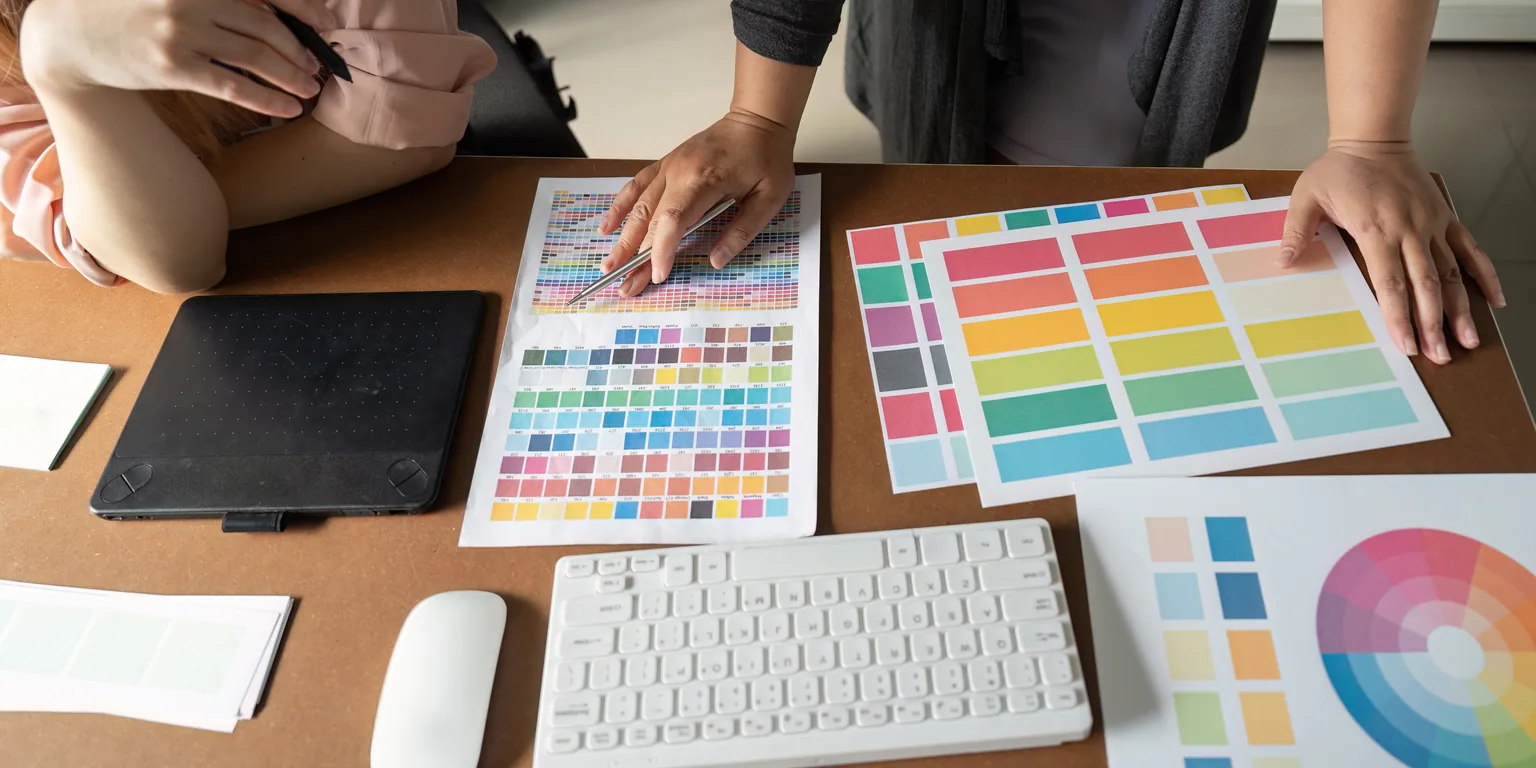
Your dispensary brand identity, the logo, colors, typography and photography, is the part most people call branding. It has to work in very different places: a lit sign on the street, a tiny profile photo on Google Maps, a jar label, a bag and a phone screen in dark mode.
- Logo: a primary version, a simpler mark for small sizes, and one-color versions for stamps, bags and engraving.
- Colors: a short palette with exact values for print and screen. With California’s guidance on bright colors and flashy finishes in mind, choose a palette you could defend in front of a regulator, and use one accent color on purpose.
- Typography: one or two typefaces that read well on a menu board and on a phone.
- Photography: your real store, your real staff and your real products, with every person clearly over 21.
5. Give the brand a voice
Your voice is how the brand sounds in writing and in person. Choose three or four traits, such as warm, expert and plainspoken, and show what each one looks like in practice: how you write a product description, how you answer a review, how you greet someone on their first visit. List the words you use and the ones you avoid. Leave out health claims such as “cures anxiety” or “treats pain”, which regulators read as drug claims, and keep the slang at the level your customer actually uses.
6. Design the store around the brand
The store is where dispensary branding gets tested. Walk through a visit in order and design each moment:
- The street: the sign, the windows and the entrance, within your city’s sign rules.
- The check-in: the first conversation is usually an ID check. Make it friendly and fast, and tell first-timers what happens next.
- The sales floor: layout, lighting, music, displays and how products are grouped, by effect, by type or by grower.
- The counter: how budtenders recommend, how long people wait and how staff handle a question they can’t answer.
- The exit: the bag, the receipt and a reason to come back, such as your newsletter.
People often search what not to do at a dispensary before their first visit. Answer it for them, in the store and on your website: bring a valid ID, know how you can pay, and don’t consume on site unless the store is licensed for it. A first visit without surprises is part of the brand.
7. Make the website and menu feel like the store
For many customers, the website is the first visit. Your dispensary branding should carry straight into it: the site should look and sound like the store they will walk into, with the same name, colors, photos and voice, and a menu that is easy to browse on a phone and loads fast. If the site was built years before the current brand, it is usually the first thing to update. Good dispensary website design carries the brand into the menu, the order-ahead flow and the page for each location.
8. Carry it to Google, social and email
Your Google Business Profile, your listings on sites like Weedmaps and Leafly, your social accounts and your newsletter should all show the same name, logo, photos, hours and voice. That consistency is dispensary branding at its most practical: it helps people recognize you and helps search engines trust your details, as we explain in our guide to local SEO for dispensaries. For campaigns that put the brand to work every month, see our dispensary marketing ideas.
9. Write it down in brand guidelines
Brand guidelines turn your dispensary branding into rules your staff, designers and vendors can follow. Include the logo files and how to use them, the color values, the typefaces, the voice with sample copy, the photo style, examples of what to do and what to avoid, and the compliance checks for your state. We deliver ours as a visual system in HTML: a web page your team opens in a browser, with colors they can copy in one click and files they can download, so the guide gets used instead of buried in an inbox.
The 5 C’s of branding, applied to a dispensary
The 5 C’s of branding is a common framework with several versions. The one we used with J & J Flowers is clarity, conversation, community, content and consistency. Here is what each one means for dispensary branding:
- Clarity: people understand in a few seconds what kind of store you are and who it is for.
- Conversation: the brand talks with people at the counter, in reviews and in messages, and listens to what they say.
- Community: the store takes part in its neighborhood, its local events and the causes its customers care about.
- Content: the brand teaches, through product guides, first-timer tips, newsletters and posts.
- Consistency: the same promise, look and voice on the sign, the website, the bag and the phone.
If you only work on one, start with consistency. It is the C that makes the other four pay off.
Other branding frameworks owners ask about
Branding comes with plenty of rules of thumb. Most are useful as checklists, and few are backed by research. Here is what the popular ones say and how each applies to dispensary branding.
| Framework | What it says | For a dispensary |
|---|---|---|
| The three C’s | Clarity, consistency and constancy: know what you stand for, say it the same way and keep showing up. | One promise, the same look everywhere and a steady rhythm of posts and emails. |
| The four pillars | Young & Rubicam’s BrandAsset Valuator measures brands on differentiation, relevance, esteem and knowledge. | Stand apart from nearby stores, matter to your customer, earn respect through service and make sure people know what you carry. |
| The 3-7-27 rule | A rule of thumb about repetition, often put as 3 encounters to get noticed, 7 to be remembered and 27 to earn loyalty. Versions differ, and no study backs the numbers. | Don’t judge a new sign, logo or campaign after a week. Recognition takes repeated contact. |
| The 40-40-20 rule | A direct-marketing rule: 40% of the result depends on the audience, 40% on the offer and 20% on the creative. | A beautiful email sent to the wrong list with a weak offer still fails. Fix the list and the offer first. |
| Brand architecture | Three classic strategies: a branded house (one name on everything), a house of brands (separate names) and endorsed brands (separate names backed by the parent). | Decide early how the store name relates to house products, a lounge or a second location. |
The most important rule of dispensary branding sits under all of them: be consistent. A store that keeps one promise, one look and one voice for years builds more recognition than a store that rebrands every time sales slow down.
Dispensary branding mistakes to avoid
Most cannabis dispensary branding problems come from a short list of mistakes:
- Cartoons, mascots and candy looks. California bans cartoons outright, every legal state restricts marketing that appeals to minors, and they send the wrong message to the adults you want.
- Borrowing from famous brands. Parodies of snack, movie or sports logos invite trouble with regulators and with the owner of the original.
- A logo that only works big. If it turns into a blur on a phone or falls apart in one color, it fails in half the places it has to live.
- Different details everywhere. An old logo on Weedmaps, a new one on Google and a third on the sign confuse shoppers and search engines alike.
- Health claims. Words like cure, treat or heal turn a product description into a drug claim.
- A brand that stops at the door. If budtenders don’t know the brand’s promise and voice, the visit undoes the design.
When a dispensary should rebrand
A rebrand is worth the effort when the brand no longer matches the store: the market changed, you added locations, a competitor opened with a similar name, your dispensary brand identity clashes with your state’s rules, or the logo was rushed to meet a license deadline. It is rarely worth it just because the owner is tired of the logo. Customers seldom share that fatigue, and every change resets some of the recognition you built.
If you do rebrand, plan the switch like an opening. Update the sign, the bags, the website, the Google profile, every listing and the staff training in the same window, and tell customers what changed and why. Update your existing profiles instead of creating new ones, so you keep the reviews and rankings you earned, and redirect every old web page to its new address.
How to tell if your dispensary branding is working
Dispensary branding is slower to measure than a coupon, but it leaves tracks. Check these every month, store by store:
- Searches for your name: in Google Search Console and in your Business Profile performance report, growth in searches that include your store’s name means more people remember it.
- What reviews mention: when reviews name your staff, your store or a feeling you designed for, the brand is landing.
- Repeat visits: your point-of-sale data shows how many customers come back and how often.
- Direct visits to your website: people who type your address or tap a saved link already know you.
- Newsletter growth: customers who ask to hear from you are among the strongest signs of all.
Where to start with your dispensary branding
Whether you are learning how to brand a dispensary from zero or cleaning up an old brand, start with an audit. Gather every place your brand appears: the sign, the bags, the menu board, the website, Google, Weedmaps, Leafly, social accounts, emails and staff shirts. Put them side by side. Whatever doesn’t match the one idea you want people to remember goes on a list, and that list becomes your plan.
If you are opening a store, rebranding one or bringing several under one name, our cannabis branding team handles the strategy, the identity, the voice and the brand guidelines, and builds the website to match. And if you want ideas for putting the brand to work all year, our 2027 cannabis marketing calendar lists every date that sells, with a campaign idea for each one.
Frequently asked questions
-
Dispensary branding is everything that shapes how people see and remember a cannabis store: the name, logo, colors and typography, the voice on the menu and in posts, the store design, the service at the counter, and the website and Google profile. Its job is to make adults choose your store and come back to it.
-
The 5 C's of branding is a common framework with several versions. The one we use with dispensaries is clarity, conversation, community, content and consistency: people understand who you are, the brand talks with them, it takes part in its neighborhood, it teaches, and it looks and sounds the same everywhere.
-
Lists vary from source to source. Seven strategies that appear on many of them are corporate branding, product branding, personal branding, co-branding, private label, brand extension and local or geographic branding. A dispensary often uses several at once: the store brand, house products, collaborations with growers and the owner's personal brand.
-
There is no official list of eight. The rules we apply to every dispensary brand: know who you serve, stand for one idea, choose a name people can say and spell, design for small screens first, write a voice guide, train your staff, stay consistent everywhere and follow your state's marketing rules.
-
There is no standard set of nine pillars. A practical list for a dispensary: audience, purpose, positioning, name, visual identity, voice, store experience, digital presence and brand guidelines. They match the nine steps in this guide, in the order you should work on them.
-
Consistency. A brand that keeps the same promise, look and voice on the sign, the website, the bag and every social post builds recognition over time. Changing direction every few months resets that work.
-
The best-known version comes from Young & Rubicam's BrandAsset Valuator, which measures brands on four pillars: differentiation, relevance, esteem and knowledge. For a dispensary, that means standing apart from nearby stores, mattering to your customers, earning respect through service and making sure people know what you offer.
-
The three classic brand architecture strategies: a branded house, where one name covers everything; a house of brands, where each product or store has its own name; and endorsed brands, where separate names are backed by the parent brand. Dispensaries choose between them when they add house products, a lounge or new locations.
-
There is no standard list. For a cannabis founder or store manager, seven useful pillars are purpose, expertise, story, voice, visibility, relationships and consistency. A respected owner can lift the store's brand, as long as everything they post follows the same marketing rules as the store.
-
Lists vary. Five pillars that cover what a dispensary needs: purpose, or why the store exists; positioning, or who it serves and why they choose it; personality, its voice and attitude; identity, its name, logo, colors and type; and experience, what happens in the store and online.
-
It is a rule of thumb about repetition, often put as 3 encounters for people to notice a brand, 7 to remember it and 27 to become loyal. Versions differ and no study backs the exact numbers, but the lesson holds: recognition takes repeated, consistent contact, so give a new brand months before you judge it.
-
A common version is clarity, consistency and constancy: know exactly what you stand for, express it the same way everywhere, and keep showing up so people don't forget you.
-
It has no single definition. It usually describes a follow-up cadence, such as three contacts across three channels within a short window, before deciding whether to keep going. A dispensary can use the same habit with new newsletter subscribers: a welcome email, a guide for first-time shoppers and a note on what's new, spaced over a few weeks.
-
Start with who you want to serve and what they need from a store, study the five competitors closest to you, and write one sentence on why a customer should choose you. Test that sentence with your staff and a few regular customers. The name, look and voice follow from it.
-
Decide who you serve, write the one idea people should remember, choose the name, design the visual identity, define the voice, design the store experience, carry the brand into your website and menu, bring Google, social and email in line, and write it all down in brand guidelines.
-
Keep your Google Business Profile complete and current, publish a newsletter, plan campaigns around the dates that sell such as 4/20 and Green Wednesday, post useful guides for first-time shoppers, take part in local events and ask every customer for a review. Our guide to dispensary marketing ideas covers each one in detail.
-
Bring more people in and give them reasons to come back. A clear brand helps with both: shoppers find and remember the store, first-timers feel welcome, and regulars hear from you through email and social. Inside the store, train staff to recommend well, keep the online menu accurate and make ordering ahead easy.
-
As a shopper: don't arrive without a valid ID, don't assume you can pay by credit card, don't take photos of other customers and don't consume on site unless the store is licensed for it. As an owner, answer those questions on your website before the first visit, so new customers arrive relaxed.
-
The best names are easy to say and spell, different from nearby stores and well-known brands, free of anything that sounds like candy or a children's show, and available as a domain and social handle. Check every finalist against trademark records with an attorney, then say it out loud: if people ask you to spell it, keep looking.
-
Margins are thin for most. In a 2024 survey by Whitney Economics, about 27% of cannabis operators reported a profit, 41% broke even and 32% lost money. Adult-use stores still fall under Section 280E of the tax code, which blocks ordinary business deductions, while state-licensed medical marijuana moved to Schedule III in April 2026.
-
For a dispensary, the ideas that work within the rules use channels you own: an up-to-date Google Business Profile, a fast website with a live menu, a monthly newsletter, guides for first-time shoppers, seasonal campaigns and local events. Google and Meta refuse ads for THC products, so these channels carry most of the load.
-
Flower. Cova's breakdown of 2024 sales put flower at 40%, vapes at 22%, pre-rolls at 16%, edibles at 14%, concentrates at 7% and beverages at 1%. The mix is shifting: in California, vape sales passed flower for the first time in 2025.
-
There is no official ranking, and the answer depends on what a shopper values: selection, prices, service or the store itself. For an owner, the more useful question is which store is the best in your own neighborhood, and that comes down to the experience your brand delivers on every visit.
-
There is no national answer: demand changes by state, season and price. Your own point-of-sale data is the most reliable guide to what your customers want, and data firms such as Headset track best sellers market by market.
-
Not at the federal level for marijuana goods and services. Under the USPTO's Examination Guide 1-19, a federal trademark requires use that is lawful under federal law, and adult-use cannabis is still in Schedule I. Some hemp-derived goods can qualify. Ask a trademark attorney about your options, including a state registration.
-
It depends on the scope: a name and a logo cost far less than a full identity with packaging, signage, a website and brand guidelines. Ask for a written proposal that lists every deliverable, the number of design rounds and who owns the final files.
-
Watch searches that include your store's name in Google Search Console and in your Business Profile, what reviews mention, how often customers return in your point-of-sale data, direct visits to your website and newsletter sign-ups. When those grow, more people remember your store.